Buying guide · 6 min read
Salt-Based vs Salt-Free Softeners: The Honest Comparison
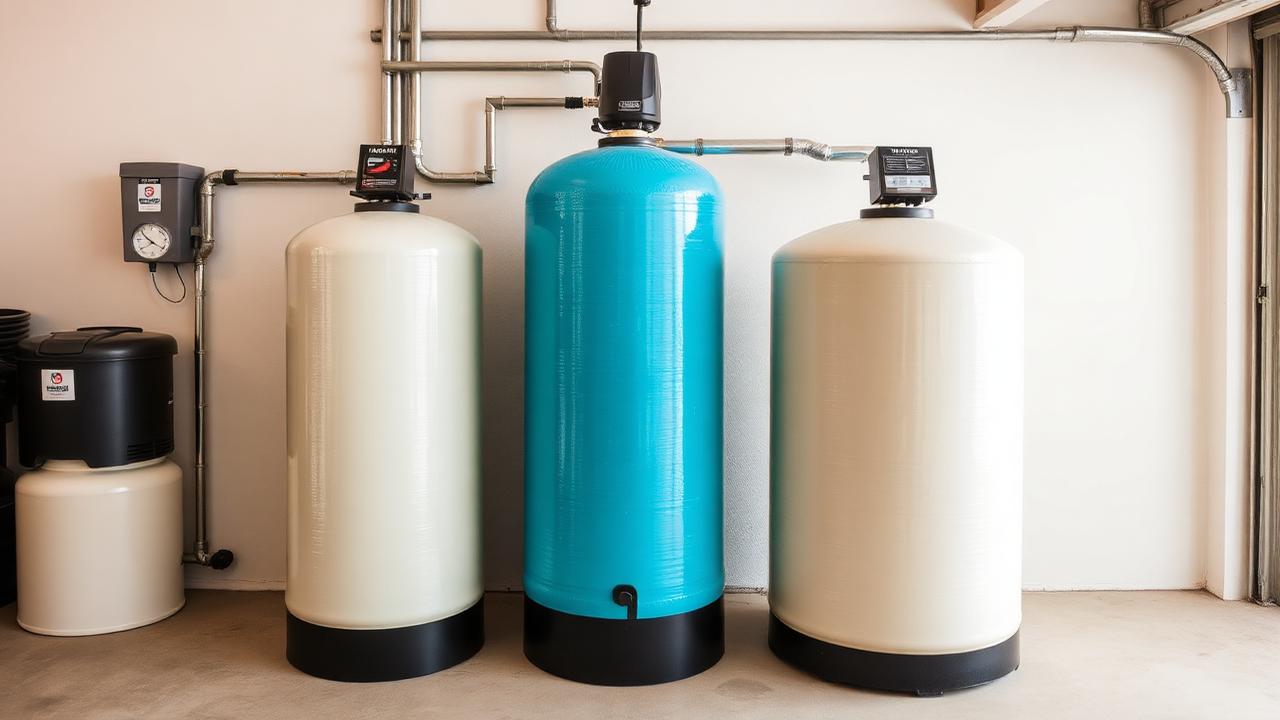
Walk into any plumbing showroom and you will see two product categories labeled softener: traditional salt-based ion-exchange tanks, and salt-free conditioners. They sound similar. They are not. Only one of them actually removes hardness from your water.
What a salt-based softener does
A salt-based softener uses a resin bed that swaps calcium and magnesium ions (the minerals that cause hardness) for sodium ions. The water that comes out is soft in the technical sense: a hardness test reads near zero. The resin is regenerated every few days with brine from a salt tank.
Soft water lathers more easily, leaves no scale on faucets, dramatically extends the life of tankless water heaters and dishwashers, and feels slick on the skin compared to hard water.
Trade-offs: the system needs a drain line for regeneration, it adds a small amount of sodium to the soft water (typically 10 to 50 mg per liter at average hardness), and it needs salt added a few times a year.
What a salt-free conditioner does
Salt-free conditioners use Template-Assisted Crystallization (TAC) media. The calcium and magnesium are not removed. Instead, the media converts them into microscopic crystals that stay suspended in the water rather than depositing as scale on pipes and heating elements.
Independent studies (notably the Arizona State University TAC research) show 88 to 99 percent scale reduction in heated systems. The water is not soft - a hardness test still reads high - but you stop seeing scale build up on the tankless heater and the shower glass.
Trade-offs: no slick feel, no laundry benefit, no help with existing soap scum, and the technology is less effective above roughly 75 grains per gallon hardness.
How to pick
Hardness over 15 gpg, scaling appliances, dry skin, dingy laundry: go salt-based.
Hardness 5 to 15 gpg, no drain line, no space for a salt tank, mainly worried about scale on a tankless water heater: salt-free is reasonable.
Hardness over 25 gpg: salt-free is not enough on its own.
Restricted sodium diet: pair a salt-based system with a kitchen reverse osmosis unit for drinking water, or use a potassium chloride substitute in the brine tank.
Recommended products that solve this
Here are the systems that match this guide. We do not show prices because manufacturers change them often, the buttons open the brand's current pricing in a new tab.
Top pick
SoftPro (QWT)
SoftPro Elite Water Softener
Salt-based softener
Salt-based ion-exchange softener, the right answer for hardness above 15 gpg, scaling appliances or dingy laundry.
Also consider
SpringWell
SpringWell FutureSoft FS1 (Salt-Free)
Salt-free conditioner (TAC)

Salt-free TAC conditioner for the 5 to 15 gpg range when scale on a tankless heater is the main complaint.
Keep reading
More buying guides
-
City Water vs Well Water: Which Whole House System Do You Need?
7 min read
-
Sizing a Whole House Water Filter: Flow, Fixtures, and Tank Size
5 min read
-
Iron Filters for Well Water: Air Injection vs Manganese Greensand
7 min read
-
UV Purifiers for Well Water: When You Need One and What to Buy
6 min read
-
Water Testing: Home Kits vs Certified Labs (And When Each Makes Sense)
6 min read